
Introduction
The year was 1968, and globally, it was a moment of revolution. Martin Luther King Jr. had been assassinated, and Japan and South Korea began their Economic miracle, and yet while the world was developing, China was drowning in an economic crisis powered by ONE MAN.
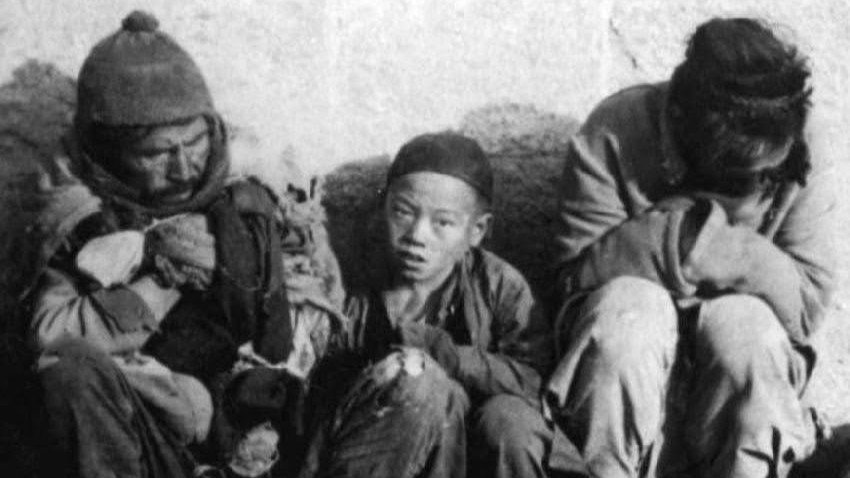
Mao Zedong. He had established such terrific policies that millions died, people starved to death, and children died in their parents’ hands, and on the other hand, in cities, it wasn’t hunger, it was Injustice. Writers, poets, teachers, and politicians were dragged from their homes and beaten in public and imprisoned for imaginary crimes, and among the so-called “traitors” was the family of a small 15-year-old boy named Xi Jinping. Xi’s father had once fought alongside Mao and the Communist Party, but one false accusation of disloyalty led to the entire family being doomed.
Xi was thrown out of Beijing and sent to a poor village that had no electricity, no water, no shelter, and no education. For 7 long years, he lived in a hut which would fall any minute, a fly infested bed and moved manure through rice paddies and lived as a “SON OF A TRAITOR.” but little did the people of China know that this boy who was the son of a disgraced traitor would at one point become the most powerful man in China and one of the dangerous men in the world…
The Story
To understand Xi’s rise, you must first understand the collapse of Mao’s China. You see, Mao Zedong had launched a policy called the Great Leap forward. To implement this policy, Mao banned Private farming altogether and forced villages into giant communes, overnight, farmers who had tilled their land for generations. Now, became slaves on their own land, and then came his obsession with steel.
One fine day, Mao got up and decided that the Chinese had to go from 5.5 million tonnes of steel production in 1955 to 150 million tonnes by 1967, but you know what, he gave his people no iron to work with!! So, to meet Mao’s unrealistic goal families started melting their cooking pots, their farming tools and even children’s toys and the result cheap, low-quality scrap that couldn’t build anything and now the people had no pots to cook in and no tools to farm with but the madness didn’t stop there Mao declared war on farming itself and said traditional farming to be backwards and forced peasents to follow a fake science called LYSENKOISM.
In this method, seeds were planted so close together that they choked each other. The plowing was so deep that it destroyed the soil structure. It looked scientific on paper, but in reality, it was suicide. Look at this. China’s grain output collapsed from 200 million tons to 143 million tons in just 2 years. And you know what happened because of this?
30 million people starved to death. China experienced the worst hunger disaster in human history. In the early 20th century, famine and epidemic spread like wildfire. And while millions of women and children were starving, you know what Mao did? He practically doubled the grain exports just to maintain China’s
International image. A lie that China was growing while its people were dying. This is how political optics ruined millions of families all across China. And when Mao’s grip weakened, he turned children into bodyguards to control the chaos.
So students beat their teachers, sons reported their own fathers, and temples and books were burning. This was the nightmare that Xi was exiled to. But what happened next was nothing less than a masterclass in strategic patience. You see, Xi realized that in China, real power did not come from rebellion. It came from the communist party itself. So if he wanted to rise, he had to be inside the system. So he applied to join the party again and again and again…
And every single time, the answer was the same. You are rejected because your father’s crimes make you untrustworthy. Now, most people would have given up at this point, but Xi saw something that others couldn’t. He understood that rejection wasn’t the end. Rejection was just information. Information about what the system feared and what he had to change to be accepted.
And with that clarity, Xi began the slow, deliberate process of reshaping his destiny. And instead of fleeing back to Beijing like other disgraced youth, Xi stayed, and he hauled grain under the blazing sun. He carried Manure through the rice patties, and he dug irrigation ditches until his hands bled. And while all of his peers saw manual labor as punishment, Xi saw it as intelligence gathering. You know why? Because he wasn’t just surviving, he was understanding how power flows from the ground up.
And while Xi toiled in the village, the villagers watched this former Beijing elite share their hunger, share their exhaustion. And share their daily humiliation. And something unprecedented happened. These villagers endorsed Xi for village party leadership. And by 1974, with grassroots support behind him, the Communist Party finally accepted Xi Jinping.
Xi’s first move after getting party membership reveals the mind of a strategic genius. In 1975, China’s university system was in ruins. Colleges had been shut for a decade. The national entrance exam was suspended, and a handful of operational universities were left.
Admissions totally depended on political connections and party approval. So Xi leveraged his new party status to secure admission in Singua University. Singua University was a prestigious university. It is hailed as China’s equivalent of Harvard and MIT. But this wasn’t about education. It was about access. You see, Singua was where the children of party elites studied. So Xi wasn’t just getting a degree. He was re-entering the power table his father once belonged to.
Here, he rebuilt connections, became friends with future leaders, and learned that in China, your network is your lifeline. And here’s where his strategy play came in. In 1976, Mao Zedong died, and China saw the
rise of a new leader named Deng Xiaoping. China was now under a new leader, Deng Xiaoping. Twice removed from the party himself, Deng had seen the consequences of the Cultural Revolution.
He set out to reverse many of Mao’s policies. And in 1978, Deng Xiaoping finally opened the doors of China for economic liberalization. Now, when economic liberalization picked up in China, Xi’s father was
Brought in again. He was assigned to run the Guangdong province, and this renewed influence opened doors for him. So he landed a prestigious position in the Central Military Commission, the supreme military authority of the communist party.
Now, most ambitious politicians would have clung to this Beijing power position. But Xi did the complete opposite. In 1982, he voluntarily exiled himself again, this time to a poor province called Hebei.
Now, the reason why this was a very weird decision is that it’s almost like a politician in India going from the core power network of Delhi to a remote state like Nagaland. At first glance, this looked absurd. Why would anyone trade the polished corridors of Beijing, where the power was concentrated, for the muddy roads of rural Hebei?
For most politicians, leaving the capital meant political suicide. It meant being forgotten. But Xi understood something deeper about power. You see, Beijing was always full of ambitious men clawing at each other for influence. Their fate was always tied to shifting political winds. One wrong alliance, one wrong word, and a career could collapse overnight.
But in Hebei, however, there was no competition, no spotlight. This is where real governance was to be done. So, irrigation canals had to be fixed, food shortages had to be solved, and peasant grievances had to be addressed. This was the dirty, unglamorous work that a politician had to do. But while Xi worked in this province,
Xi got something that was far more valuable than prestige. While others in Beijing were known only for speeches and titles, Xi would be known as the man who could actually run China. By staying out of the dirty politics of the capital, Xi avoided becoming anyone’s immediate threat. He was rising slowly, invisibly, and safely. So what looked like exile was in fact a masterclass in patience and governance. And this is where the third step came in. What Xi accomplished next should terrify every Western strategist. He took up one province at a time and turned it into an economic miracle for China.
Xi Jinping had the insane track record of transforming the economies of four different provinces. Hebei, Fujian, Zhejiang, and Shanghai. Take Zhen Deng County in Hebei, where Xi was actually stationed in 1982. In this province, 70% of residents were farmers earning barely enough to survive. This was because of Ma’s ridiculous policies. But Xi deployed a semi-uburban economic model, which had four strategic interventions. While farmers were growing low-value grains, Xi enabled the farmers to grow high-value vegetables and fruits.
Since the farmers were uneducated and unaware, he enabled the government to provide greenhouse materials, and technical training was also given to the farmers so that they could enhance their yield. He also gave the farmers direct access to sales channels to urban consumers. On top of that, he also gave them performance-based rewards. And the result, farmers earning 60 yuan per month suddenly started making 2,00 to 2,400 yuan per month and annual incomes jumped to 10,000 yuan.
Today, Zending ranks among Hebei’s top 10 economies. And since 1978, its GDP and per capita income have grown over 300 times. This is how Xi Jinping established himself as a master governor. And then came Xi Jinping’s golden opportunity that made him one of the most powerful men in China. This opportunity was the opportunity of Shanghai’s corruption test.
In 2006, then Communist Party Secretary of Shanghai Chen Leang Yu was sacked in one of China’s highest-level corruption investigations. Xi Jinping was chosen to replace him in what was a major step up in his political career. You see, Shanghai is the financial capital of China. But the problem in 2006 was that it was rocked by a massive corruption scandal. And because the 2008 Beijing Olympics were right around the corner, this was a very, very big challenge.
Because the Beijing Olympics was China’s propaganda instrument to actually showcase to the world that the Chinese model had been successful. And the problem was that in Shanghai, the party chief himself had embezzled $400 million from the city’s pension fund. So with the 2008 Beijing Olympics approaching, China needed Shanghai to be stable and scandal-free. And this is where she was brought in to perform a surgical operation in China’s most important city. And guess what? His
The method was executed with surgical precision. And here’s what he did. He declined special privileges like private villas and luxury trains. He canled lavish banquets and excessive ceremonies. And he encouraged Alibaba and other firms to set up finance and tech operations in Shanghai. This reassured foreign investors that Shanghai’s investment climate was still safe. And the best part was that he was able to maintain an impressive 12.9% growth in spite of the political chaos. And finally, China was ready for the
The Beijing Olympics of 2008, which were held stunningly. And because of this impressive track record, Xi was promoted to the Politburo Standing Committee. For those who don’t know, look at this. The Chinese Communist Party is a giant pyramid. It has 92 million members at the bottom. But as you climb up, the numbers shrink dramatically, and the power becomes absolute. At the base, you have the National Party Congress, 2,300 delegates.
Who meet once every 5 years. But out of them, some are chosen to move up into the central committee of about 380 members. From there, it gets even narrower. A select few from the central committee join the politburo bureau, which has 24 of the most powerful leaders in the country. This includes state ministers, provincial bosses, and military chiefs. But the real power sits even above that. This is called the Polit Bureau Standing Committee.
Today, it just has seven members. This is China’s true inner circle, a small group that makes decisions for 1.4 billion people. And at the very top is the general secretary of the Communist Party. This is the position that Xi Jinping currently holds. And that title makes him not just the president of China, but the unquestioned leader of his entire pyramid. So, the question is, how did he get here?
Well, when Xi Jinping was promoted to the Standing Committee, it wasn’t just a new job. It was the entry
into the room where every major decision about China was taken. From the economy to the military to even censorship was decided at this table. Now, the people deciding on the top leadership at that time wanted an experienced, polished person who was neither too ambitious nor too strong.
And Xi Jinping, because of his history of humility and service to the villagers, was seen as a less ambitious, controllable leader. He had over two decades of experience and a clean image with no corruption record at all. So when the general secretary stepped down in 2012 after his two terms were over.
Xi Jinping emerged at the top spot to practically become the supreme leader of the Communist Party of China, and when Xi became the president, people thought they could just control him like a puppet, but as it turns out, it was a catastrophic misjudgment. You know why? Because Xi went on a firing spree and, under the banner of anti-corruption, systematically eliminated every potential driver in the system, hundreds of senior officials disappeared, military generals vanished, and political competitors were neutralized.
And by his second term, she had restructured the polit bureau in such a way that 60% members had direct ties to him. Then, in 2018, Xi did something that shocked the world altogether. President Xi Jinping’s name and political ideology are now written into the party’s constitution. Xi Jinping rewrote China’s constitution and enshrined something called Xi Jinping Thought as permanent law. What does this mean? It means that his ideas can never be questioned. Secondly, he eliminated presidential term limits. So, before Chinese leaders served a maximum of two terms, and then they had to step down.
But Xi changed the rules so that he could be president forever. And you know what, guys, when these changes were actually up for vote in China’s parliament, guess how many people opposed them? Zero. Yes, not a single opposing voice in a room of 3,000 delegates.
Why? Because everyone knew what happened to the people who disagreed with Xi. But here’s the terrifying part. His dictatorship actually worked. While America’s GDP grew by 60%, India’s grew by 83%, but China’s grew by 111%. Xi Jinping proved that Dictatorship can provide faster economic results than democracy. But the Billion-dollar question is whether Xi can subdue a nation as big as China, and can he continue to deliver results with his ruthless dictatorship? This is a question only time can answer….